
MVAR Member and Army Veteran Jim Sparkman Inspires Local Emerging Leaders
September 24, 2025
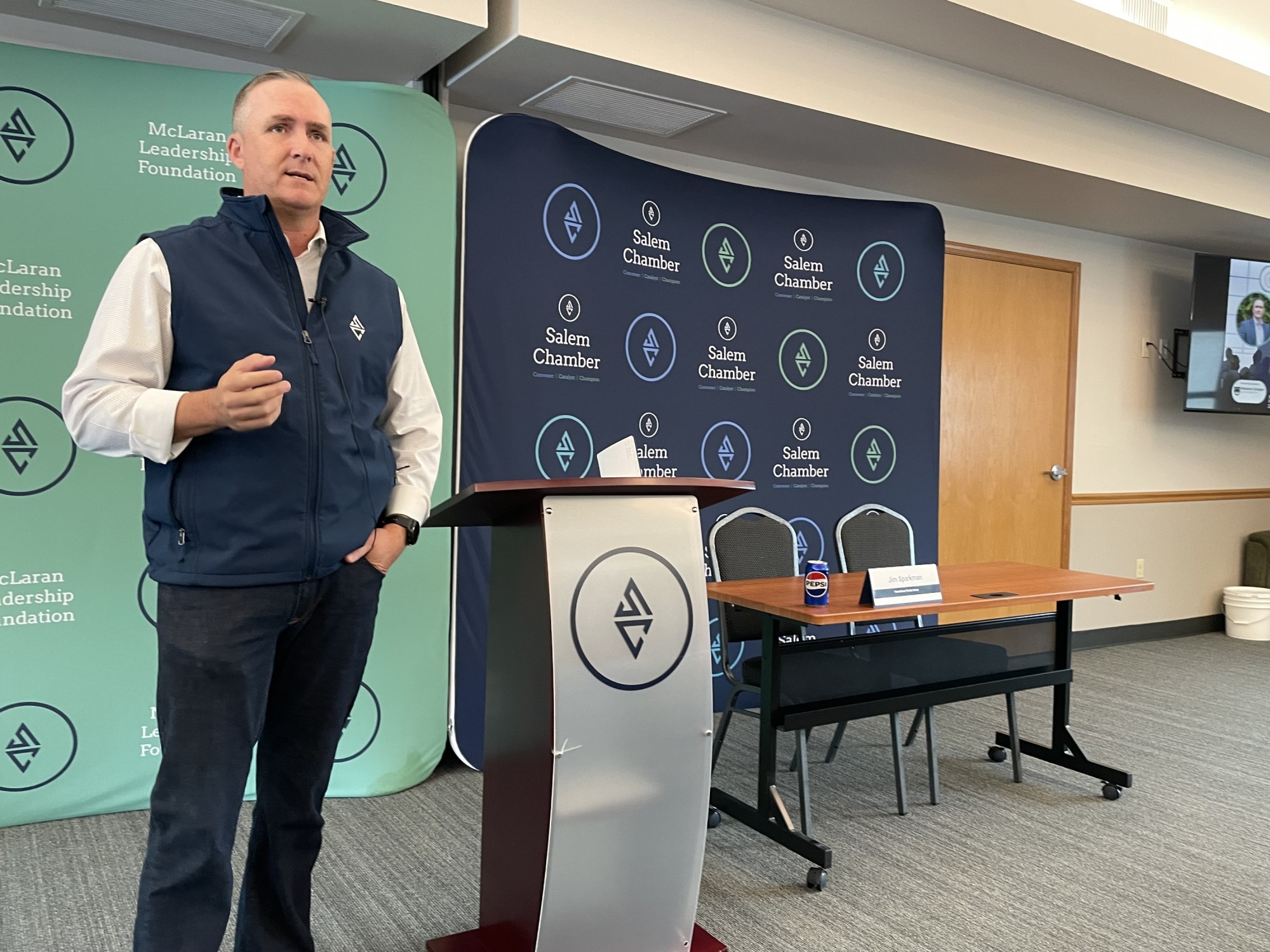 Resiliency. Teamwork. Self-reflection.
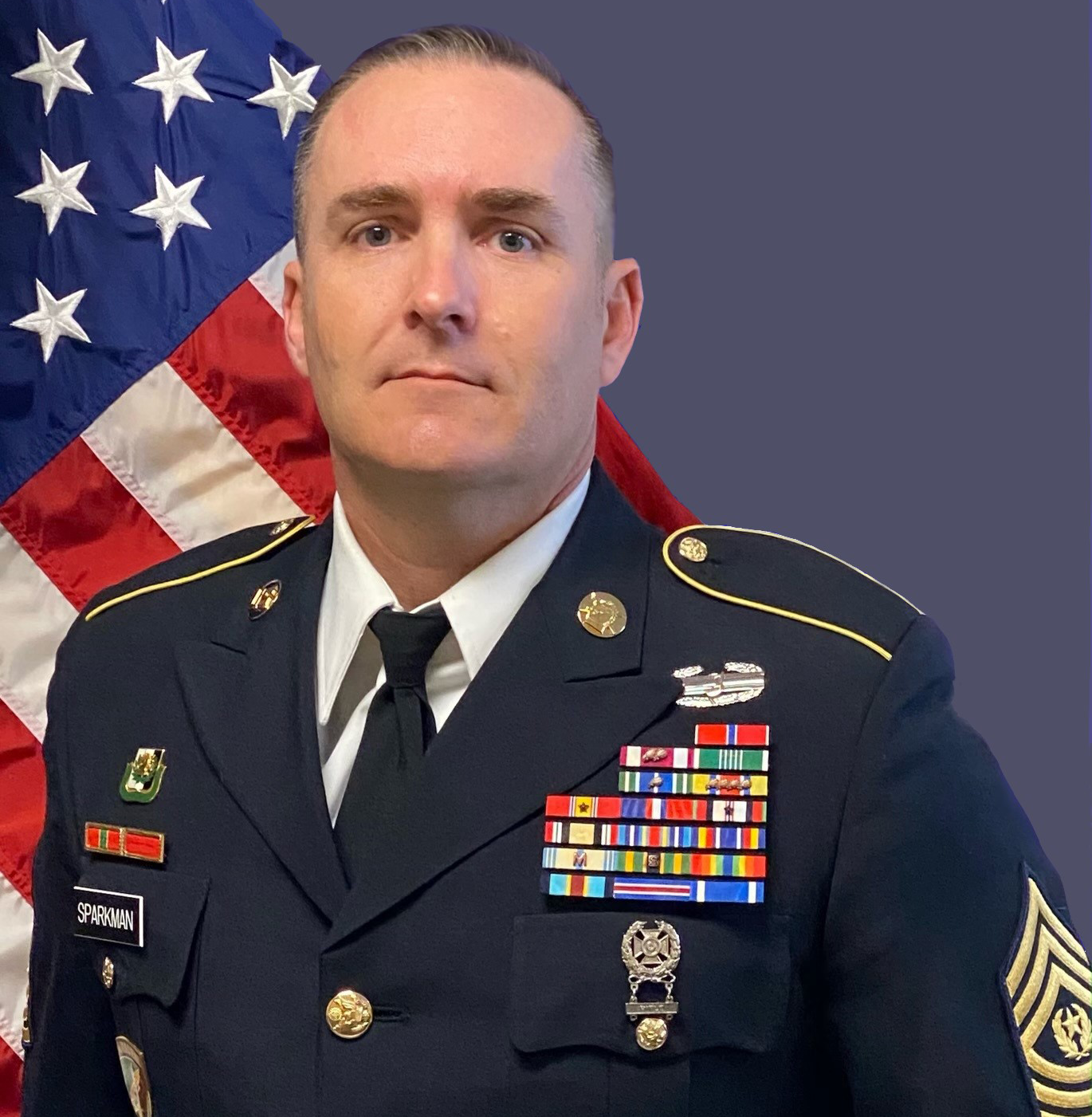
These principles have guided Jim Sparkman throughout his 30-plus years serving in the U.S. Army and building a successful career in real estate. As a partner and principal broker of HomeSmart Realty Group and Command Sergeant Major of the Army Reserve’s 7th Psychological Operations Group, Sparkman knows a thing or two about perseverance.
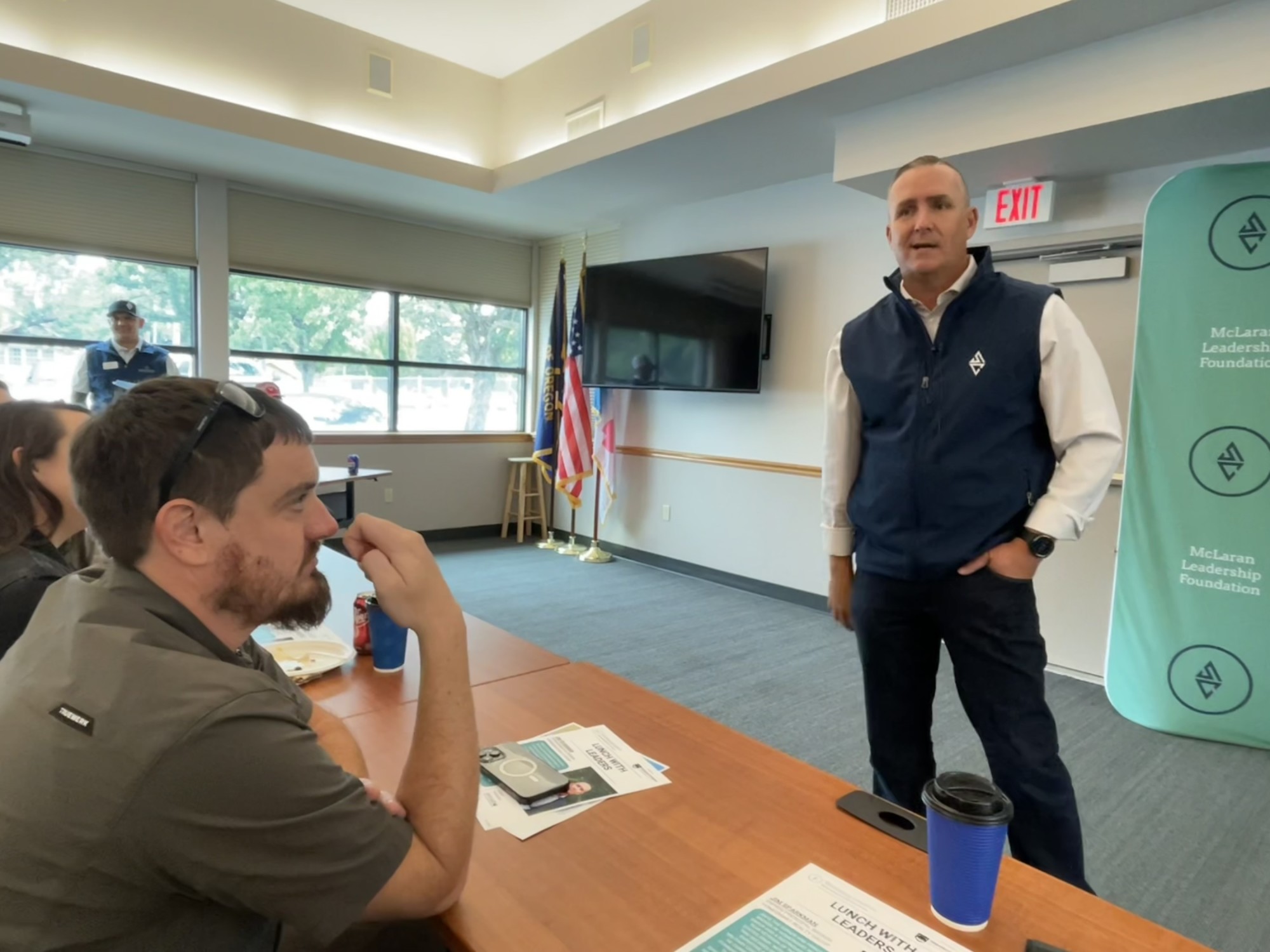
Sparkman shared his story with the Salem Emerging Leaders during a luncheon sponsored by MVAR on Thursday, Sept. 11, marking the 24th anniversary of the 9/11 terrorist attacks. That day, he remembers, “changed everything” and compelled him to become the leader he is today.
Facing Adversity
Sparkman enlisted in the Army after graduating from high school in 1994. He initially entered on an infantry contract and served nearly four years before going on Inactive Ready Reserve and returning to Oregon. There, he started his own construction company and met his wife of 26 years, Kristin.
He was brought off reserve in 1999 and into Psychological Operations, supporting missions on the ground by building relationships to gain trust and influence.
Then came 9/11. Amid the chaos and confusion, Sparkman said he got a call from his unit saying he was not to leave the state, as they could mobilize.
Decades later, Sparkman still gets emotional remembering his deployments to Afghanistan, the Balkans, and Iraq. During one particular deployment to Kandahar with the Joint Special Operations Task Force, he said they were in many firefights over a seven-month period. Many great soldiers didn’t make it home.
“That deployment really feeds into a lot of what I believe about adversity,” Sparkman said. “I think resilience is really the key. Yes, bad things happen. But when you’re in the military, if a mess-up happens, the mission is still going on. There’s no time for you to give up.”
 Lessons In Leadership
 Lessons In Leadership
In his civilian life, Sparkman had decided it was time to move on from construction work. Both his mother and grandmother had previously worked in real estate, and he decided it was something he wanted to try.
In 2013, Sparkman and his partners opened a HomeSmart franchise with 14 agents. The same year, he was selected as Command Sergeant Major, placing him in two significant leadership roles simultaneously. Meanwhile, his son, Brayden, was diagnosed with leukemia and began undergoing chemotherapy treatment at OHSU Doernbecher Children’s Hospital.
“It was a really messy, challenging, scary, and exhilarating time,” Sparkman said. “It wasn’t easy. It never is. But the fact of the matter is that, for us, it was pivotal in our lives.”
Guided by his strong Christian faith, wonderful friends, and lessons in resiliency, Sparkman said he has learned what it takes to be an effective leader across all walks of life. He highlighted teamwork, stick-to-itiveness, and leading by example as pillars of his success.
“If I’m going to ask you to do (something), then I’m going to expect it of myself,” he said. “I don’t know how we hold somebody to a standard if we’re not setting the standard by living it how we expect others to live it.”
 Empowering Others
 Empowering Others
Growth came slowly for Sparkman's real estate franchise, though by year four he said they saw a massive jump to nearly 180 agents. He credits their consistency, hard work, and culture-building for the expansion, led by what he calls the “3-by-5” leadership model.
The idea, Sparkman said, is simple.
“We can only intimately lead 3-5 people,” he said. “When you try to lead everybody, you will never be effective. You don’t empower the next level down to lead, and you don’t empower relationships.”
By “intimately,” Sparkman said that means knowing those 3-5 individuals on a deep personal level.
“I need to know what their birthday is. I need to know what their anniversary is. When did they graduate from college? Do they have kids? How old are they? What are their names? What are their birthdays? All of these things,” he said.
“So, if there’s anything that can help in your professional life, one of the things I would say is to figure out who you lead, and if you’ve been intimately leading them. That really makes the culture of an organization.”